Persian Gulf Becomes New Market for AI Chips, with Strong Funding and High Demand

Oct 11, 2025 By

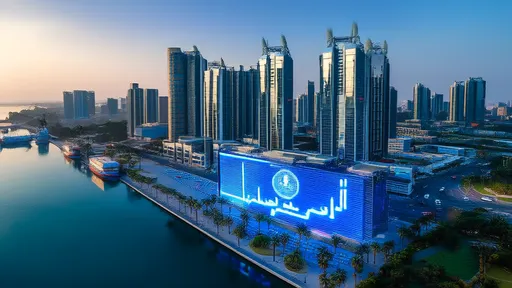
The shimmering waters of the Persian Gulf have long been associated with the flow of crude oil, the lifeblood of the global economy for over a century. Yet, beneath the surface of this familiar narrative, a profound and rapid transformation is underway. The region, powered by immense sovereign wealth and ambitious national visions, is emerging as a significant and unexpected new frontier in the global race for artificial intelligence supremacy. This is not merely about purchasing the latest technology; it is a strategic, deep-pocketed pivot to position the Gulf nations as future hubs for AI development and deployment, creating a voracious and financially potent new market for the world's most advanced semiconductors.


For decades, the economic might of Gulf Cooperation Council (GCC) nations like the United Arab Emirates and Saudi Arabia was measured in barrels per day. Their sovereign wealth funds, such as the Abu Dhabi Investment Authority and the Public Investment Fund, grew to colossal sizes by recycling petrodollars into global equities, real estate, and infrastructure. However, the strategic calculus has fundamentally shifted. The leadership in Riyadh and Abu Dhabi recognizes that the era of hydrocarbon dominance is finite. Their ambitious national blueprints—Saudi Arabia's Vision 2030 and the UAE's broader diversification plans—explicitly target a future built on knowledge and technology, with AI as a central pillar. This is not a tentative exploration but a full-scale economic re-engineering, and it requires the most powerful computational engines available: AI chips.


The demand emanating from the Gulf is multifaceted and driven by both national strategy and practical necessity. On a grand scale, Saudi Arabia is planning the construction of NEOM, a $500 billion futuristic megacity where AI is intended to manage everything from traffic flows and energy grids to public services. Such an undertaking is not just an urban planning project; it is a massive data generation and processing challenge that will require data centers packed with thousands of the most advanced AI accelerators. Similarly, the UAE has established itself as an early adopter, appointing a Minister of State for Artificial Intelligence in 2017 and launching numerous initiatives across healthcare, finance, and government services. The scale of these national projects creates a baseline demand that is both substantial and long-term, insulating it from the short-term market fluctuations that affect other sectors.


Beyond these headline-grabbing megaprojects, a more granular demand is building from the region's corporate giants. State-owned energy behemoths like Saudi Aramco and Abu Dhabi National Oil Company are aggressively investing in AI to optimize exploration, predict maintenance for refineries, and enhance supply chain efficiency. These are complex, industrial-scale problems where a marginal gain in efficiency translates to hundreds of millions of dollars in savings or revenue, making the cost of high-end AI hardware a justifiable expense. Financial institutions, telecom operators, and burgeoning tech startups in Dubai and Riyadh are also integrating AI into their core operations, further fueling the need for powerful computing infrastructure, both on-premise and through cloud services that are, themselves, built on vast arrays of AI chips.


What makes the Gulf market particularly compelling for chipmakers like Nvidia, AMD, and a growing list of competitors is its unique financial profile. The term "capital-rich" takes on a new meaning here. Unlike many other emerging tech markets where budgets are constrained and procurement cycles are long, Gulf entities have the ability to make large, strategic purchases with remarkable speed. Sovereign wealth funds are not just passive investors; they are active participants, capable of funding entire ecosystems. There are widespread reports of government-backed entities placing massive, direct orders for Nvidia's H100 and next-generation B200 GPUs, often buying up entire allocations and creating a new, high-priority channel for the chipmakers. This financial heft allows them to bypass traditional supply chain bottlenecks and secure the crucial hardware that is the key to their AI ambitions.


This financial power extends beyond mere procurement. The Gulf states are leveraging their wealth to build the entire AI value chain from the ground up. The UAE, for instance, has gone so far as to establish its own homegrown AI chip company, G42's subsidiary M42, aiming to eventually design semiconductors tailored to regional needs and data patterns. While still in early stages, this move signals a long-term intent to reduce reliance on foreign technology and cultivate indigenous expertise. Furthermore, these nations are investing billions in building state-of-the-art data centers. These facilities are not just empty shells; they need to be populated with the very AI chips that are in such high demand globally, creating a sustained and growing market for years to come.


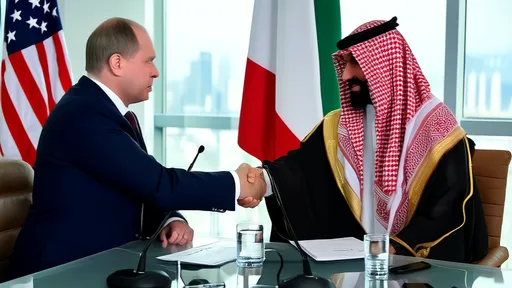
The geopolitical dimension of this shift cannot be overlooked. The intense rivalry between the United States and China over advanced technology, particularly semiconductors, has created a complex landscape. The U.S. has imposed stringent export controls on the sale of its most powerful AI chips to China, effectively locking Chinese firms out of the leading edge of the technology. This has left chipmakers searching for other deep-pocketed, non-Chinese markets to absorb their high-margin, cutting-edge products. The Gulf states, maintaining strategic relationships with both East and West, present an ideal alternative. They are politically stable, financially reliable, and their ambitions align perfectly with the need for the advanced computing that U.S. companies are eager to sell. In many ways, the Gulf has become a geopolitical safe harbor for the AI chip industry.


However, this rapid ascent is not without its significant challenges. The most immediate and glaring issue is the scarcity of local, deep-tech talent. Building and maintaining the complex infrastructure for AI, let alone innovating in chip design or algorithm development, requires a highly specialized workforce that the region is still in the process of cultivating. While universities are launching new AI programs and coding bootcamps are proliferating, there remains a heavy reliance on imported expertise. This creates a vulnerability and could slow down the pace of implementation if not addressed through aggressive education and immigration policies. The long-term sustainability of the AI ecosystem depends on developing a robust pipeline of homegrown engineers, data scientists, and researchers.


Another critical challenge lies in the realm of data governance and regulation. AI models are only as good as the data they are trained on. The Gulf nations will need to navigate the complex interplay between ambitious data-hungry AI projects and evolving global standards for data privacy, security, and ethical use. Creating a regulatory environment that fosters innovation while protecting individual rights and ensuring national security will be a delicate balancing act. How these issues are resolved will significantly impact the region's ability to collaborate with international partners and attract top-tier global tech firms to set up substantial operations beyond just sales offices.


Looking forward, the Persian Gulf's foray into the AI chip market is more than a fleeting trend; it is a structural shift in the global tech landscape. The region's combination of urgent strategic necessity, virtually unlimited capital, and grand vision has created a new epicenter of demand for the engines of artificial intelligence. While the path is fraught with challenges related to talent and regulation, the direction of travel is clear. The world's leading chipmakers are already reorienting their strategies to court this new class of customer. As the Gulf continues to build its digital future, one server rack at a time, it is poised to become a permanent and influential force in the high-stakes world of advanced semiconductors, proving that the next great resource to flow from the region may not be oil, but artificial intelligence.


Recommend Posts
Business

How to Respond to the Division of Trade Patterns in Free Zones? Global Conference Explores Paths for Supply Chain Reshaping

By /Oct 10, 2025

The global trade landscape is undergoing a profound transformation, marked by increasing fragmentation and regionalization. In response, free zones worldwide are adapting their strategies to remain relevant and competitive in this new era. The recent World Conference on Supply Chain Resilience brought together industry leaders, policymakers, and academics to explore pathways for supply chain restructuring in the face of these challenges.
Business

NVIDIA Granted Approval to Export Billion-Dollar AI Chips to UAE

By /Oct 11, 2025

The United States government has granted approval for Nvidia to export billions of dollars worth of advanced artificial intelligence chips to the United Arab Emirates, marking a significant development in global technology trade and geopolitical relations. This decision comes amid growing international competition in AI development and reflects the strategic importance of Middle Eastern nations in the global technology landscape.
Business

Persian Gulf Becomes New Market for AI Chips, with Strong Funding and High Demand

By /Oct 11, 2025

The shimmering waters of the Persian Gulf have long been associated with the flow of crude oil, the lifeblood of the global economy for over a century. Yet, beneath the surface of this familiar narrative, a profound and rapid transformation is underway. The region, powered by immense sovereign wealth and ambitious national visions, is emerging as a significant and unexpected new frontier in the global race for artificial intelligence supremacy. This is not merely about purchasing the latest technology; it is a strategic, deep-pocketed pivot to position the Gulf nations as future hubs for AI development and deployment, creating a voracious and financially potent new market for the world's most advanced semiconductors.
Business

Nvidia Gets US Approval to Export Billions of Dollars Worth of AI Chips to UAE

By /Oct 11, 2025

The global technology landscape witnessed a significant shift this week as the United States government granted NVIDIA Corporation approval to export billions of dollars worth of advanced artificial intelligence chips to the United Arab Emirates. This decision comes after months of intense scrutiny and represents a pivotal moment in the geopolitical dynamics surrounding AI technology.
Business

Shanghai Waigaoqiao and Other Chinese Benchmark Cases Included in Top Global Free Zone Dialogue

By /Oct 10, 2025

Shanghai Waigaoqiao Free Trade Zone has achieved a remarkable milestone by securing a seat at the global free zone elite dialogue, marking a significant recognition of China's evolving role in international trade and economic innovation. This development represents not just a triumph for Shanghai but a testament to China's broader strategy of integrating its special economic zones into the fabric of global commerce. The inclusion of Waigaoqiao and other Chinese benchmark cases in these high-level discussions signals a shift in how the world perceives China's economic model, moving from observation to active participation in shaping the future of free trade zones worldwide.
Business

Hainan International Economic Development Bureau: Over 50 Activities Planned for the Conference to Highlight Hainan's Characteristics

By /Oct 10, 2025

The Hainan International Economic Development Bureau has unveiled an ambitious program for its upcoming international conference, featuring over 50 meticulously planned events that showcase the island province's unique characteristics. This comprehensive agenda represents a strategic effort to position Hainan as not just another Chinese economic zone, but as a distinctive global destination with its own cultural and environmental identity.
Business

The Free Trade Zone Congress Promotes Bidirectional Empowerment of International Experience Import" and "Chinese Experience Export"

By /Oct 10, 2025

The Free Zone Congress has emerged as a pivotal platform facilitating a dynamic exchange of international expertise and Chinese practices, creating a symbiotic relationship that transcends traditional economic boundaries. This unique convergence represents more than just knowledge sharing—it embodies a fundamental shift in how global economic zones collaborate and innovate together.
Business

Nvidia's Stock Hits All-Time High Following Approval of UAE Chip Exports

By /Oct 11, 2025

Nvidia shares surged to unprecedented heights this week, shattering previous records as the chipmaking giant received crucial export approvals to the United Arab Emirates. The breakthrough comes after months of regulatory uncertainty that had clouded the company's international expansion prospects. Market analysts watched in awe as the stock climbed steadily throughout Tuesday's trading session, ultimately closing at a historic peak that exceeded even the most optimistic projections.
Business

The New Era of Chip Diplomacy: The AI Blueprint of the US and UAE is Becoming a Reality

By /Oct 11, 2025

The desert winds of Abu Dhabi carry more than just sand these days. They carry whispers of silicon dreams and geopolitical recalibrations as the United Arab Emirates positions itself at the epicenter of a new technological frontier. The term "Chip Diplomacy" has moved from policy white papers into the tangible reality of construction cranes and high-level diplomatic exchanges. At the heart of this transformation is a burgeoning and complex partnership with the United States, one that seeks to redraw the global map of artificial intelligence and semiconductor supremacy.
Business

World Free Zone Organization Chairman: Hainan at the forefront of institutional innovation and green transformation

By /Oct 10, 2025

The Chairman of the World Free Zones Organization recently highlighted Hainan's pioneering role in institutional innovation and green transformation during an international forum on special economic zones. His remarks underscored the province's strategic positioning as a testing ground for China's next phase of economic reform while simultaneously addressing global environmental challenges.
Business

US and Saudi Arabia Close to Reaching a Chip Export Agreement

By /Oct 11, 2025

The geopolitical landscape of semiconductor technology is shifting dramatically as whispers from diplomatic corridors suggest the United States and Saudi Arabia are nearing a landmark agreement that would reshape global chip supply chains. After months of delicate negotiations conducted away from public scrutiny, sources familiar with the matter indicate that both nations have bridged significant differences to establish a framework for advanced semiconductor exports to the Kingdom.
Business

A Look Ahead to the '14th Five-Year Plan': The Jewelry Industry Welcomes a New Cycle of Policy Dividends

By /Oct 16, 2025

As China prepares to roll out its 15th Five-Year Plan (2026-2030), the jewelry industry stands at the cusp of a transformative era. The upcoming policy framework is expected to usher in a new cycle of growth, driven by strategic government initiatives aimed at boosting domestic consumption, fostering innovation, and promoting sustainable practices. Industry insiders and market analysts are closely watching the developments, anticipating that the "15th Five-Year Plan" will provide a significant impetus to the sector, aligning it with broader national goals of economic upgrading and cultural confidence.
Business

UAE's AI Ambitions: Investing in Chips to Leverage a Trillion-Dollar Market

By /Oct 11, 2025

The shimmering towers of Abu Dhabi and Dubai have long symbolized the United Arab Emirates' economic ambition, but a new, less visible infrastructure is rapidly taking shape beneath the digital surface. The UAE, a federation of seven sheikhdoms built on hydrocarbon wealth, is executing a bold and calculated pivot, positioning itself not just as a consumer of technology, but as a fundamental architect of the global artificial intelligence ecosystem. At the heart of this strategy lies a deceptively simple but powerful equation: leveraging its immense sovereign capital to secure the most critical resource of the 21st century—advanced semiconductors—and in doing so, unlock a potential trillion-dollar market.
Business

Building a Resilient Ecological System: Challenges and Opportunities for Free Zones in the Face of Climate Change

By /Oct 10, 2025

In the face of escalating climate challenges, the concept of building resilient ecosystems has emerged as a critical framework for sustainable development. Free zones, traditionally viewed as economic powerhouses, now stand at the intersection of vulnerability and opportunity as climate change reshapes global landscapes. These specialized economic areas, designed to facilitate trade and investment, are increasingly recognizing that their long-term viability depends on adapting to environmental realities while maintaining competitive advantages.
Business

NVIDIA's Chip Dilemma Thawed: A Delicate Balance Between Geopolitics and Business Interests

By /Oct 11, 2025

In the high-stakes arena of global technology, few companies embody the tension between geopolitical realities and commercial ambitions more vividly than Nvidia. The semiconductor giant finds itself navigating treacherous waters, caught between Washington's national security concerns and its own relentless drive for market dominance. What began as targeted restrictions on specific technologies has evolved into a complex geopolitical chess match, with Nvidia's cutting-edge chips serving as both pawn and prize.
Business

Substantial Step in US-China AI Agreement, Nvidia's Chip Export Gate Opens"

By /Oct 11, 2025

The strategic technology partnership between the United States and the United Arab Emirates has entered a new and decisive phase, marked by the substantial easing of restrictions on the export of advanced Nvidia artificial intelligence chips. This development, long anticipated by industry analysts and geopolitical observers, signals a significant alignment of technological and economic interests between the two nations, with profound implications for the global AI landscape.
Business

Enterprise Sailing Free Trade Port" - Official Website Link for World Free Zone Organization Conference for Investment Facilitation

By /Oct 10, 2025

Against the backdrop of global economic restructuring, the World Free Zones Organization (World FZO) has launched the "Enterprise Sailing Free Trade Port" digital platform, marking a significant step forward in international investment facilitation. This initiative comes at a crucial time when supply chain realignment and digital transformation are reshaping international trade patterns. The platform aims to create a seamless bridge between investors and free zones worldwide, addressing long-standing challenges in cross-border investment coordination.
Business

US Chipmakers May Be Allowed to Export Chips for AI Data Centers to Saudi Arabia

By /Oct 11, 2025

The geopolitical landscape of semiconductor exports is undergoing a subtle but significant shift as American chip manufacturers engage in advanced discussions with regulatory authorities. Multiple industry sources confirm that leading U.S. semiconductor companies are navigating the complex approval process to export high-performance computing chips to Saudi Arabia for deployment in artificial intelligence data centers.
Business

Head of African Economic Zone Organization Attends World Free Zone Organization Conference

By /Oct 10, 2025

The bustling conference hall in Dubai fell into a respectful silence as Dr. Amina Diallo, Secretary-General of the African Economic Zones Organization (AEZO), approached the podium. Her presence at the World Free Zones Organization (World FZO) Annual International Conference and Exhibition marked a significant moment in the global dialogue on trade and industrialization. For years, the narrative surrounding African economic zones had been one of untapped potential. Today, Dr. Diallo was there to articulate a new story—one of transformation, resilience, and strategic integration into the world economy.
Business

Sanya Haitang Bay Project Leverages Free Trade Zone Conference Platform for Global Investment Attraction

By /Oct 10, 2025

The tropical breeze of Sanya's Haitang Bay carries more than the scent of sea salt and plumeria these days; it carries the palpable energy of a region poised for a transformative leap onto the global stage. At the heart of this momentum is the ambitious Haitang Bay project, a multi-faceted development initiative that is strategically leveraging the prestigious Boao Forum for Asia (BFA) Annual Conference platform to orchestrate a sophisticated global investment campaign. This is not merely a real estate venture; it is a calculated endeavor to position a slice of Hainan as a premier international destination for business, luxury, and sustainable living.