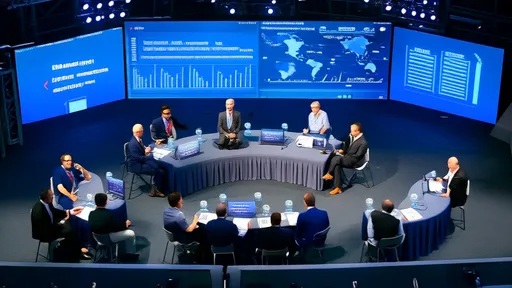
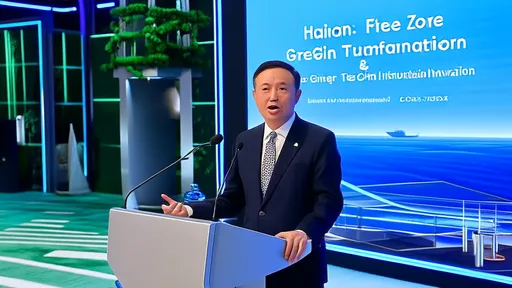
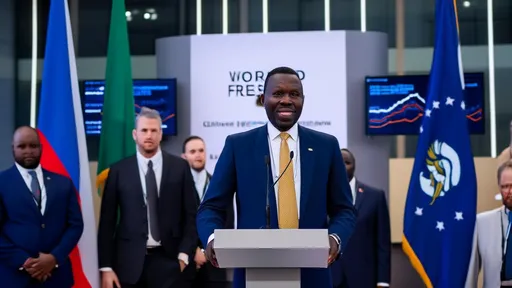
The Chairman of the World Free Zones Organization recently highlighted Hainan's pioneering role in institutional innovation and green transformation during an international forum on special economic zones. His remarks underscored the province's strategic positioning as a testing ground for China's next phase of economic reform while simultaneously addressing global environmental challenges.
Speaking before an audience of policymakers and industry leaders, the Chairman emphasized that Hainan's dual focus on institutional breakthroughs and sustainable development represents a new paradigm for special economic zones worldwide. "What we're witnessing in Hainan is not merely incremental improvement but fundamental reimagining of how special economic zones can drive both economic growth and environmental stewardship," he noted. The Chairman's assessment comes at a crucial juncture as Hainan accelerates its development as China's largest free trade port.
Institutional Innovation as Growth Catalyst
Hainan's institutional innovation extends beyond traditional economic liberalization measures. The province has implemented groundbreaking policies in trade facilitation, financial services, and cross-border data flow management that have attracted significant international attention. The negative list for market access has been progressively shortened, allowing foreign investment in sectors previously restricted, while the customs clearance process has been streamlined to unprecedented efficiency levels.
The Chairman particularly praised Hainan's unique approach to balancing openness with risk management. "The institutional framework being developed here demonstrates that economic liberalization and regulatory oversight need not be mutually exclusive," he observed. This balanced approach has enabled Hainan to create what many experts are calling the most business-friendly environment in China while maintaining robust financial stability and security protocols.
Recent innovations include the implementation of a sophisticated regulatory sandbox for financial technology, allowing companies to test new products and services in a controlled environment. Additionally, Hainan has pioneered new dispute resolution mechanisms specifically designed for international commercial conflicts, positioning the island as a potential hub for international legal services in the Asia-Pacific region.
Green Transformation in Practice
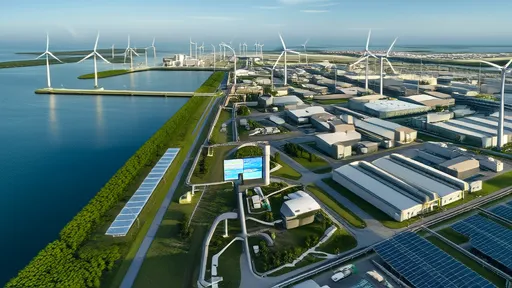
Parallel to its institutional reforms, Hainan has embarked on an ambitious green transformation strategy that the Chairman described as "equally impressive and potentially more significant for long-term global impact." The province has committed to achieving peak carbon emissions ahead of national targets and is rapidly developing renewable energy infrastructure. Solar and wind power generation capacity has increased dramatically over the past three years, with offshore wind projects particularly showing promise.
The transportation sector represents another area where Hainan's green transformation is particularly evident. The province has implemented the world's most comprehensive electric vehicle adoption program, with supporting infrastructure development keeping pace with ambitious vehicle replacement targets. "Hainan's approach to electrifying its transportation network serves as a model for other regions seeking to reduce emissions while maintaining economic vitality," the Chairman remarked.
Beyond energy and transportation, Hainan has integrated sustainability into urban planning and agricultural practices. The construction industry operates under strict green building standards, while agricultural reforms emphasize organic farming and circular economy principles. These comprehensive measures have positioned Hainan as a living laboratory for sustainable development practices that could be replicated elsewhere.
Synergistic Development Approach
What makes Hainan's experience particularly noteworthy, according to the Chairman, is how institutional innovation and green transformation reinforce each other. The same policy frameworks that facilitate trade and investment are being leveraged to promote sustainable business practices. For instance, the streamlined approval processes for foreign investment include environmental impact assessments that exceed national standards, ensuring that economic development aligns with ecological protection goals.
The province has developed innovative green finance mechanisms that channel investment toward sustainable projects while providing preferential treatment for companies demonstrating strong environmental performance. This creates powerful economic incentives for businesses to adopt greener practices while accessing Hainan's growing market. "The integration of sustainability criteria into the very fabric of Hainan's economic policies represents a breakthrough in how we think about development," the Chairman noted.
This synergistic approach extends to Hainan's international cooperation initiatives. The province has established partnerships with global organizations and other special economic zones to share best practices in both institutional design and environmental management. These exchanges have enriched Hainan's own development while contributing to global knowledge about sustainable economic zone management.
Global Implications and Future Prospects
The Chairman emphasized that Hainan's experience holds valuable lessons for special economic zones worldwide. As global supply chains face increasing pressure to become more sustainable and resilient, the integration of environmental considerations into economic policy becomes increasingly crucial. Hainan's model suggests that economic competitiveness and environmental responsibility can be mutually reinforcing rather than conflicting objectives.
Looking ahead, the Chairman expressed confidence in Hainan's continued leadership in both institutional innovation and green transformation. The province's comprehensive development plan includes further liberalization of its services sector, enhanced intellectual property protection, and additional measures to promote circular economy principles. These initiatives are expected to solidify Hainan's position as a preferred destination for high-quality investment while advancing its sustainability agenda.
The international community will be watching Hainan's progress closely, particularly as the province works toward its goal of establishing a fully operational free trade port system by 2025. The success of Hainan's unique approach could influence the evolution of special economic zones globally, potentially ushering in a new generation of development zones that prioritize both economic dynamism and environmental sustainability.
In conclusion, the Chairman's assessment highlights Hainan's emergence as a global reference point for integrated economic and environmental reform. The province's simultaneous pursuit of institutional innovation and green transformation represents a bold experiment in sustainable development that could reshape how nations approach economic growth in an era of increasing environmental challenges. As Hainan continues to refine its policies and demonstrate tangible results, its experience will likely inform similar initiatives worldwide, contributing to global efforts to reconcile economic development with planetary boundaries.
By /Oct 10, 2025

By /Oct 11, 2025
By /Oct 11, 2025

By /Oct 11, 2025
By /Oct 10, 2025
By /Oct 10, 2025

By /Oct 10, 2025

By /Oct 11, 2025

By /Oct 11, 2025
By /Oct 10, 2025

By /Oct 11, 2025

By /Oct 16, 2025

By /Oct 11, 2025
By /Oct 10, 2025

By /Oct 11, 2025
By /Oct 11, 2025
By /Oct 10, 2025

By /Oct 11, 2025
By /Oct 10, 2025
By /Oct 10, 2025
