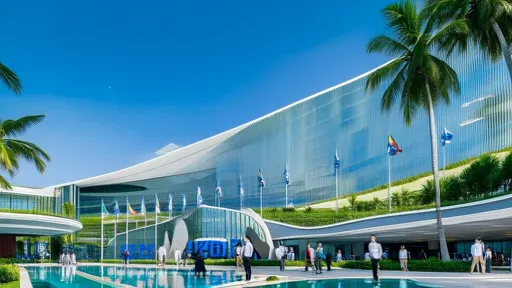
The New Era of Chip Diplomacy: The AI Blueprint of the US and UAE is Becoming a Reality

Oct 11, 2025 By

The desert winds of Abu Dhabi carry more than just sand these days. They carry whispers of silicon dreams and geopolitical recalibrations as the United Arab Emirates positions itself at the epicenter of a new technological frontier. The term "Chip Diplomacy" has moved from policy white papers into the tangible reality of construction cranes and high-level diplomatic exchanges. At the heart of this transformation is a burgeoning and complex partnership with the United States, one that seeks to redraw the global map of artificial intelligence and semiconductor supremacy.


The relationship, once primarily defined by energy and security, is now being forged in the fires of computational power. For Washington, the UAE represents a strategic, if complicated, ally in its broader contest with China for technological dominance. The Gulf nation offers capital, ambition, and a geographic positioning that serves as a bridge between East and West. For Abu Dhabi, the partnership is a cornerstone of its "Projects of the 50," a national strategy to pivot its economy away from hydrocarbon dependency and toward a knowledge-based future, with AI as its north star. This mutual interest is crystallizing into a series of concrete initiatives that are rapidly moving from blueprint to reality.


The Engine Room: G42 and the American Gambit

Central to this unfolding drama is the Emirati technology conglomerate G42. Led by its formidable CEO Peng Xiao, G42 has become the primary vehicle for the UAE's AI ambitions. Its recent strategic moves have sent shockwaves through the global tech community and have been closely orchestrated with American interests. The watershed moment came with G42's decisive pivot away from Chinese partnerships, a move that involved divesting its stakes in Chinese firms and publicly committing to a technology stack sourced almost exclusively from the United States.


This was not merely a business decision; it was a profound geopolitical alignment. The Biden administration, viewing G42's previous ties to Huawei and other Chinese tech giants as a significant security risk, engaged in months of intense, high-stakes diplomacy. The result was a tacit understanding: American cutting-edge technology in exchange for Emirati adherence to U.S. security and ethical frameworks. This delicate dance culminated in a landmark $1.5 billion investment from Microsoft into G42, giving the U.S. tech behemoth a minority stake and a seat on the board. More critically, the deal stipulates that G42 will run its AI applications and services on Microsoft's Azure cloud, effectively placing its technological core within a U.S.-controlled ecosystem.


The Semiconductor Lifeline

An AI revolution cannot run on algorithms alone; it requires the physical bedrock of semiconductors. Here, the U.S.-UAE partnership faces its most significant challenge and opportunity. The global chip shortage and the intense competition for advanced manufacturing capacity have made access to these "new oil" reserves a national security imperative for both nations. The UAE, through entities like G42 and the Advanced Technology Research Council (ATRC), is not content to be a mere consumer. It is aggressively building domestic capacity.


The creation of the region's first dedicated semiconductor manufacturing facility, in partnership with a consortium of U.S. and European chipmakers, is underway in the Khalifa Industrial Zone. This facility aims to produce not the most cutting-edge 3-nanometer chips, but the highly sought-after legacy chips that power everything from automobiles to industrial machinery. This strategic focus fills a critical gap in the global supply chain, a vulnerability starkly exposed during the pandemic. Meanwhile, G42's in-house AI chip design team, staffed by veterans poached from AMD, Intel, and NVIDIA, is working on custom processors tailored for the massive data centers planned across the UAE. Their work represents the first serious attempt in the Middle East to move up the semiconductor value chain from design to fabrication.


Building the AI Oasis: Data Centers and Compute Power

Across the sun-baked landscapes of the Emirates, a new type of infrastructure is rising. Vast, water-cooled data centers, powered by ambitious solar projects, are becoming the temples of this new age. The most prominent of these is the "Qurasis" project, a joint venture between G42 and a leading U.S. cloud provider. Designed to be one of the most powerful supercomputers in the world upon completion, Qurasis is intended to provide the computational muscle necessary to train the next generation of large language models, rivaling those developed by OpenAI and Google.


This is not just about raw power; it is about sovereignty. By hosting this compute capacity on its own soil, the UAE aims to control its digital destiny, ensuring that its national data remains within its borders and that its researchers have unimpeded access to the tools of modern AI development. The U.S. partners see this as a strategic beachhead, a trusted node in a global network of AI infrastructure that aligns with democratic values, as opposed to the alternative models being promoted by Beijing. The energy requirements are colossal, driving unprecedented investment in the UAE's nuclear and solar energy sectors, creating a fascinating synergy between its traditional energy expertise and its futuristic digital ambitions.


The Human Capital Equation

Perhaps the most enduring aspect of this chip diplomacy is the human network being woven between the two countries. The UAE is on a relentless talent acquisition drive, offering lucrative packages to attract top AI researchers, chip engineers, and data scientists from American universities and tech hubs. The Mohamed bin Zayed University of Artificial Intelligence (MBZUAI), the world's first graduate-level AI university, has established deep partnerships with Carnegie Mellon, MIT, and Stanford, facilitating a continuous exchange of students and faculty.


Conversely, American tech giants are establishing major regional headquarters in Abu Dhabi Global Market (ADGM) and Dubai International Financial Centre (DIFC), bringing with them hundreds of high-skilled jobs and creating a new tech corridor. This two-way flow of expertise is creating a unique cultural and intellectual fusion, blending Silicon Valley's disruptive innovation ethos with the UAE's long-term, state-backed strategic vision. It is a grand experiment in whether a hyper-capitalist tech model can be successfully integrated with a state-directed economic plan.


Navigating the Chokepoints: Geopolitics and Ethical Scrutiny

The path forward is not without its perils. The U.S.-UAE AI alliance exists within a complex web of regional and global tensions. Washington remains wary of the UAE's simultaneous relationships with other U.S. strategic competitors, including Russia and, to a lesser extent now, China. The Committee on Foreign Investment in the United States (CFIUS) maintains a watchful eye on all technology transfers, and any misstep by Emirati entities could quickly strain the partnership.


Furthermore, the rapid ascent of the UAE's AI capabilities has drawn intense ethical scrutiny. Human rights organizations and some U.S. lawmakers have raised alarms about the potential for these powerful technologies to be used for surveillance, both domestically and exported to other authoritarian-leaning governments. The UAE's recent implementation of its own AI governance framework is a direct response to these concerns, an attempt to build international confidence and assure partners that its technological development will be guided by responsible and transparent principles. How it balances its ambitious drive for technological sovereignty with these external ethical demands will be a critical test.


The New Silk Road

In many ways, the U.S.-UAE partnership is constructing a new digital Silk Road, with data and semiconductors as its currency. It is a bold attempt to create a viable, Western-aligned technological hub in a region historically fraught with instability. The success or failure of this venture will have ramifications far beyond the shores of the Arabian Gulf. It challenges the notion that AI supremacy is a binary contest solely between the United States and China, suggesting a more multipolar future is possible.


The cranes building data centers in the desert and the engineers designing chips in Abu Dhabi's gleaming offices are the foot soldiers in this quiet but profound shift. The blueprint, once a speculative document, is now a living, breathing reality. The era of chip diplomacy has truly begun, and its center of gravity, for now, lies in the unexpected alliance between a global superpower and an ambitious Gulf nation, both betting their futures on the promise of artificial intelligence.


Recommend Posts
Business

How to Respond to the Division of Trade Patterns in Free Zones? Global Conference Explores Paths for Supply Chain Reshaping

By /Oct 10, 2025

The global trade landscape is undergoing a profound transformation, marked by increasing fragmentation and regionalization. In response, free zones worldwide are adapting their strategies to remain relevant and competitive in this new era. The recent World Conference on Supply Chain Resilience brought together industry leaders, policymakers, and academics to explore pathways for supply chain restructuring in the face of these challenges.
Business

NVIDIA Granted Approval to Export Billion-Dollar AI Chips to UAE

By /Oct 11, 2025

The United States government has granted approval for Nvidia to export billions of dollars worth of advanced artificial intelligence chips to the United Arab Emirates, marking a significant development in global technology trade and geopolitical relations. This decision comes amid growing international competition in AI development and reflects the strategic importance of Middle Eastern nations in the global technology landscape.
Business

Persian Gulf Becomes New Market for AI Chips, with Strong Funding and High Demand

By /Oct 11, 2025

The shimmering waters of the Persian Gulf have long been associated with the flow of crude oil, the lifeblood of the global economy for over a century. Yet, beneath the surface of this familiar narrative, a profound and rapid transformation is underway. The region, powered by immense sovereign wealth and ambitious national visions, is emerging as a significant and unexpected new frontier in the global race for artificial intelligence supremacy. This is not merely about purchasing the latest technology; it is a strategic, deep-pocketed pivot to position the Gulf nations as future hubs for AI development and deployment, creating a voracious and financially potent new market for the world's most advanced semiconductors.
Business

Nvidia Gets US Approval to Export Billions of Dollars Worth of AI Chips to UAE

By /Oct 11, 2025

The global technology landscape witnessed a significant shift this week as the United States government granted NVIDIA Corporation approval to export billions of dollars worth of advanced artificial intelligence chips to the United Arab Emirates. This decision comes after months of intense scrutiny and represents a pivotal moment in the geopolitical dynamics surrounding AI technology.
Business

Shanghai Waigaoqiao and Other Chinese Benchmark Cases Included in Top Global Free Zone Dialogue

By /Oct 10, 2025

Shanghai Waigaoqiao Free Trade Zone has achieved a remarkable milestone by securing a seat at the global free zone elite dialogue, marking a significant recognition of China's evolving role in international trade and economic innovation. This development represents not just a triumph for Shanghai but a testament to China's broader strategy of integrating its special economic zones into the fabric of global commerce. The inclusion of Waigaoqiao and other Chinese benchmark cases in these high-level discussions signals a shift in how the world perceives China's economic model, moving from observation to active participation in shaping the future of free trade zones worldwide.
Business

Hainan International Economic Development Bureau: Over 50 Activities Planned for the Conference to Highlight Hainan's Characteristics

By /Oct 10, 2025

The Hainan International Economic Development Bureau has unveiled an ambitious program for its upcoming international conference, featuring over 50 meticulously planned events that showcase the island province's unique characteristics. This comprehensive agenda represents a strategic effort to position Hainan as not just another Chinese economic zone, but as a distinctive global destination with its own cultural and environmental identity.
Business

The Free Trade Zone Congress Promotes Bidirectional Empowerment of International Experience Import" and "Chinese Experience Export"

By /Oct 10, 2025

The Free Zone Congress has emerged as a pivotal platform facilitating a dynamic exchange of international expertise and Chinese practices, creating a symbiotic relationship that transcends traditional economic boundaries. This unique convergence represents more than just knowledge sharing—it embodies a fundamental shift in how global economic zones collaborate and innovate together.
Business

Nvidia's Stock Hits All-Time High Following Approval of UAE Chip Exports

By /Oct 11, 2025

Nvidia shares surged to unprecedented heights this week, shattering previous records as the chipmaking giant received crucial export approvals to the United Arab Emirates. The breakthrough comes after months of regulatory uncertainty that had clouded the company's international expansion prospects. Market analysts watched in awe as the stock climbed steadily throughout Tuesday's trading session, ultimately closing at a historic peak that exceeded even the most optimistic projections.
Business

The New Era of Chip Diplomacy: The AI Blueprint of the US and UAE is Becoming a Reality

By /Oct 11, 2025

The desert winds of Abu Dhabi carry more than just sand these days. They carry whispers of silicon dreams and geopolitical recalibrations as the United Arab Emirates positions itself at the epicenter of a new technological frontier. The term "Chip Diplomacy" has moved from policy white papers into the tangible reality of construction cranes and high-level diplomatic exchanges. At the heart of this transformation is a burgeoning and complex partnership with the United States, one that seeks to redraw the global map of artificial intelligence and semiconductor supremacy.
Business

World Free Zone Organization Chairman: Hainan at the forefront of institutional innovation and green transformation

By /Oct 10, 2025

The Chairman of the World Free Zones Organization recently highlighted Hainan's pioneering role in institutional innovation and green transformation during an international forum on special economic zones. His remarks underscored the province's strategic positioning as a testing ground for China's next phase of economic reform while simultaneously addressing global environmental challenges.
Business

US and Saudi Arabia Close to Reaching a Chip Export Agreement

By /Oct 11, 2025

The geopolitical landscape of semiconductor technology is shifting dramatically as whispers from diplomatic corridors suggest the United States and Saudi Arabia are nearing a landmark agreement that would reshape global chip supply chains. After months of delicate negotiations conducted away from public scrutiny, sources familiar with the matter indicate that both nations have bridged significant differences to establish a framework for advanced semiconductor exports to the Kingdom.
Business

A Look Ahead to the '14th Five-Year Plan': The Jewelry Industry Welcomes a New Cycle of Policy Dividends

By /Oct 16, 2025

As China prepares to roll out its 15th Five-Year Plan (2026-2030), the jewelry industry stands at the cusp of a transformative era. The upcoming policy framework is expected to usher in a new cycle of growth, driven by strategic government initiatives aimed at boosting domestic consumption, fostering innovation, and promoting sustainable practices. Industry insiders and market analysts are closely watching the developments, anticipating that the "15th Five-Year Plan" will provide a significant impetus to the sector, aligning it with broader national goals of economic upgrading and cultural confidence.
Business

UAE's AI Ambitions: Investing in Chips to Leverage a Trillion-Dollar Market

By /Oct 11, 2025

The shimmering towers of Abu Dhabi and Dubai have long symbolized the United Arab Emirates' economic ambition, but a new, less visible infrastructure is rapidly taking shape beneath the digital surface. The UAE, a federation of seven sheikhdoms built on hydrocarbon wealth, is executing a bold and calculated pivot, positioning itself not just as a consumer of technology, but as a fundamental architect of the global artificial intelligence ecosystem. At the heart of this strategy lies a deceptively simple but powerful equation: leveraging its immense sovereign capital to secure the most critical resource of the 21st century—advanced semiconductors—and in doing so, unlock a potential trillion-dollar market.
Business

Building a Resilient Ecological System: Challenges and Opportunities for Free Zones in the Face of Climate Change

By /Oct 10, 2025

In the face of escalating climate challenges, the concept of building resilient ecosystems has emerged as a critical framework for sustainable development. Free zones, traditionally viewed as economic powerhouses, now stand at the intersection of vulnerability and opportunity as climate change reshapes global landscapes. These specialized economic areas, designed to facilitate trade and investment, are increasingly recognizing that their long-term viability depends on adapting to environmental realities while maintaining competitive advantages.
Business

NVIDIA's Chip Dilemma Thawed: A Delicate Balance Between Geopolitics and Business Interests

By /Oct 11, 2025

In the high-stakes arena of global technology, few companies embody the tension between geopolitical realities and commercial ambitions more vividly than Nvidia. The semiconductor giant finds itself navigating treacherous waters, caught between Washington's national security concerns and its own relentless drive for market dominance. What began as targeted restrictions on specific technologies has evolved into a complex geopolitical chess match, with Nvidia's cutting-edge chips serving as both pawn and prize.
Business

Substantial Step in US-China AI Agreement, Nvidia's Chip Export Gate Opens"

By /Oct 11, 2025

The strategic technology partnership between the United States and the United Arab Emirates has entered a new and decisive phase, marked by the substantial easing of restrictions on the export of advanced Nvidia artificial intelligence chips. This development, long anticipated by industry analysts and geopolitical observers, signals a significant alignment of technological and economic interests between the two nations, with profound implications for the global AI landscape.
Business

Enterprise Sailing Free Trade Port" - Official Website Link for World Free Zone Organization Conference for Investment Facilitation

By /Oct 10, 2025

Against the backdrop of global economic restructuring, the World Free Zones Organization (World FZO) has launched the "Enterprise Sailing Free Trade Port" digital platform, marking a significant step forward in international investment facilitation. This initiative comes at a crucial time when supply chain realignment and digital transformation are reshaping international trade patterns. The platform aims to create a seamless bridge between investors and free zones worldwide, addressing long-standing challenges in cross-border investment coordination.
Business

US Chipmakers May Be Allowed to Export Chips for AI Data Centers to Saudi Arabia

By /Oct 11, 2025

The geopolitical landscape of semiconductor exports is undergoing a subtle but significant shift as American chip manufacturers engage in advanced discussions with regulatory authorities. Multiple industry sources confirm that leading U.S. semiconductor companies are navigating the complex approval process to export high-performance computing chips to Saudi Arabia for deployment in artificial intelligence data centers.
Business

Head of African Economic Zone Organization Attends World Free Zone Organization Conference

By /Oct 10, 2025

The bustling conference hall in Dubai fell into a respectful silence as Dr. Amina Diallo, Secretary-General of the African Economic Zones Organization (AEZO), approached the podium. Her presence at the World Free Zones Organization (World FZO) Annual International Conference and Exhibition marked a significant moment in the global dialogue on trade and industrialization. For years, the narrative surrounding African economic zones had been one of untapped potential. Today, Dr. Diallo was there to articulate a new story—one of transformation, resilience, and strategic integration into the world economy.
Business

Sanya Haitang Bay Project Leverages Free Trade Zone Conference Platform for Global Investment Attraction

By /Oct 10, 2025

The tropical breeze of Sanya's Haitang Bay carries more than the scent of sea salt and plumeria these days; it carries the palpable energy of a region poised for a transformative leap onto the global stage. At the heart of this momentum is the ambitious Haitang Bay project, a multi-faceted development initiative that is strategically leveraging the prestigious Boao Forum for Asia (BFA) Annual Conference platform to orchestrate a sophisticated global investment campaign. This is not merely a real estate venture; it is a calculated endeavor to position a slice of Hainan as a premier international destination for business, luxury, and sustainable living.