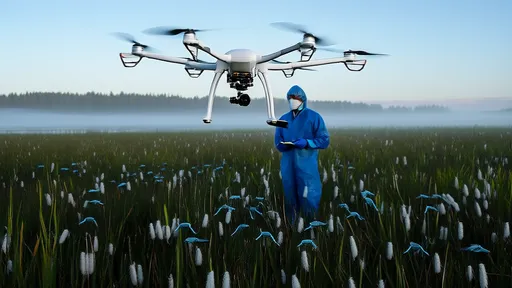
In a groundbreaking effort to combat mosquito-borne diseases, scientists and engineers have turned to an unlikely ally: drones. These unmanned aerial vehicles are now being deployed to release sterilized male mosquitoes into the wild, a strategy that could revolutionize pest control. The approach, known as the Sterile Insect Technique (SIT), has been used for decades in agriculture but is now being adapted to tackle one of humanity's oldest and deadliest foes—the mosquito.
The concept is simple yet ingenious. Male mosquitoes, which do not bite or spread disease, are sterilized in laboratories using low doses of radiation. When released into the environment, they compete with wild males to mate with females. Since the females that mate with sterilized males produce no offspring, the mosquito population gradually declines. This method is particularly appealing because it targets specific species without harming other insects or relying on chemical pesticides.
Why Drones? Traditionally, releasing sterilized mosquitoes has been a labor-intensive process, often involving ground teams covering large areas on foot or by vehicle. This method is not only slow but also limited by terrain and accessibility. Drones, however, can cover vast areas quickly and with precision, dropping mosquitoes evenly across targeted zones. In regions like Florida or Brazil, where mosquito-borne illnesses such as dengue and Zika are rampant, this technology offers a scalable solution.
One of the pioneers in this field is the International Atomic Energy Agency (IAEA), which has partnered with the Food and Agriculture Organization (FAO) to develop drone-based mosquito release systems. Early trials in Brazil have shown promising results, with some areas experiencing up to a 90% reduction in mosquito populations. The drones used in these projects are specially designed to carry and release mosquitoes without harming them, ensuring their viability upon release.
Challenges and Ethical Considerations While the technique holds immense promise, it is not without its challenges. Critics argue that large-scale releases of sterilized mosquitoes could disrupt local ecosystems, even if the targeted species is invasive. There are also concerns about public perception—convincing communities to accept the release of mosquitoes, even sterilized ones, requires extensive education and outreach. Additionally, the cost of producing and releasing millions of sterilized mosquitoes remains a barrier for some countries.
Despite these hurdles, the potential benefits are too significant to ignore. Mosquitoes are responsible for hundreds of thousands of deaths annually, primarily from malaria, dengue, and yellow fever. Traditional methods like insecticide spraying have proven ineffective in the long term, as mosquitoes rapidly develop resistance. The SIT approach, combined with drone technology, offers a sustainable and environmentally friendly alternative.
Looking ahead, researchers are exploring ways to enhance the efficiency of drone releases. Some are experimenting with AI-powered drones that can identify optimal release points based on real-time data, such as weather conditions or mosquito breeding sites. Others are investigating genetic modifications to make sterilized males even more competitive in mating, further boosting the technique's effectiveness.
As climate change expands the habitats of disease-carrying mosquitoes, the need for innovative solutions becomes ever more urgent. The marriage of drone technology and biological pest control represents a bold step forward in the fight against these deadly insects. If successful, this "ecological army" of sterilized mosquitoes could save countless lives and reshape our approach to public health.

By /Aug 18, 2025
By /Aug 18, 2025

By /Aug 18, 2025

By /Aug 18, 2025

By /Aug 18, 2025
By /Aug 18, 2025

By /Aug 18, 2025

By /Aug 18, 2025

By /Aug 18, 2025

By /Aug 18, 2025
By /Aug 18, 2025

By /Aug 18, 2025

By /Aug 18, 2025

By /Aug 18, 2025
By /Aug 18, 2025

By /Aug 18, 2025

By /Aug 18, 2025

By /Aug 18, 2025

By /Aug 18, 2025
By /Aug 18, 2025
